How to Report a Cybercrime in Ghana. The Complete 2026 Guide

Your website was hacked. Money was stolen from your MoMo account. A fake account is scamming your customers in your name. These things happen to Ghanaian business owners every single day, and most never report them. They either do not know who to call, or they assume the police cannot help. This guide walks you through exactly how to report a cybercrime in Ghana, who to contact, what evidence to gather, and what to expect after you file.
Quick facts
- Ghana lost an estimated GHS 200 million+ to cybercrime in 2024 according to the Cyber Security Authority.
- Only about 1 in 10 cybercrimes in Ghana are ever reported to the authorities.
- The Cyber Security Authority has a 24/7 incident reporting hotline available to the public.
- You can report most cybercrimes online, by phone, or in person at any regional police CID office.
Why Reporting Cybercrime in Ghana Matters
Before we get into how to report a cybercrime in Ghana, let’s be clear on why it matters. Many business owners in Accra, Kumasi, Tamale, and Nsawam quietly absorb the loss and move on. They treat the hack as “one of those things” and never tell the authorities. The result is that cybercriminals operate with near-zero fear, and the same people go on to victimise dozens more businesses.
Reporting does three things:
- It helps you recover losses. Police and the Cyber Security Authority can freeze accounts, seize assets, and in some cases help victims get their money back.
- It builds a legal case. If the scammer is caught, your report becomes part of the evidence that puts them away.
- It protects other businesses. Every report helps the authorities identify patterns and warn the public about new scams targeting MTN, Telecel, and AT subscribers.
Types of Cybercrime You Can Report in Ghana
The Cyber Security Authority (CSA) and Ghana Police Service handle many kinds of online crime. Here are the most common ones we see reported by clients at WebGold Digital (Nsawam, Ghana):
| Type of cybercrime | Common example in Ghana |
|---|---|
| Website hacking and defacement | Hackers replace your homepage with spam or betting ads |
| Mobile money fraud | Unauthorized deductions from MTN, Telecel, or AT MoMo |
| Online shopping scams | Customer pays for goods online but never receives them |
| Phishing and identity theft | Someone uses your Ghana Card or business details to take loans |
| Social media impersonation | A fake Instagram or Facebook page scams your customers |
| Ransomware attacks | Hackers lock your files and demand USD or Bitcoin payment |
| Online blackmail and sextortion | Someone threatens to leak private photos or data unless you pay |
If you are unsure whether your situation counts as a cybercrime, the general rule is simple: if a computer, phone, or the internet was used to commit the crime, you can report it.
Who to Report Cybercrime to in Ghana
Ghana has several official agencies that handle cybercrime. Knowing the right one saves you hours of bouncing between offices. Here is how to report a cybercrime in Ghana depending on the type of incident:
- Cyber Security Authority (CSA). The main national body for all cyber incidents. Has a 24/7 reporting hotline and an online portal.
- Ghana Police Service, CID Cybercrime Unit. Handles criminal investigations, arrests, and prosecution. Located at the CID Headquarters in Accra.
- Bank of Ghana. For fraud involving bank accounts, mobile money, or financial institutions.
- National Communications Authority (NCA). For SIM-related fraud, illegal network activity, and telecom scams.
- Your mobile money provider (MTN, Telecel, AT). For unauthorised MoMo transactions. Call their fraud line immediately.
Step-by-Step: How to Report a Cybercrime in Ghana
Step 1. Stay Calm and Document Everything
The first step in how to report a cybercrime in Ghana is to gather evidence while it is still fresh. Take screenshots of every message, transaction, fake page, or suspicious activity. Save emails, phone numbers, MoMo transaction IDs, and dates. Write down the sequence of events in the order they happened. The more organised your evidence, the faster your case will move.
Step 2. Stop Further Damage
Before you call anyone, take steps to stop the bleeding. Change your passwords, freeze your MoMo account, take down your hacked website, and block the scammer on every platform. If your website was hacked and you do not know how to recover it, our WordPress malware removal guide walks you through the cleanup, and our team can step in if you need urgent help.
For a deeper look at what typically happens when a Ghanaian business site gets compromised (and what recovery looks like), the team at Websys Ghana has put together a useful article on what happens when a website gets hacked in Ghana that is worth reading before you file your report.
Step 3. Call the Cyber Security Authority Hotline
The CSA operates a 24-hour incident reporting line. Call +233 26 850 2001 or 2920 (short code) to report your case. You can also email incident@csa.gov.gh or report through their official portal at csa.gov.gh. The hotline is staffed by cybersecurity professionals who will guide you on the next steps and may escalate to the police if needed.
Step 4. File a Report at the Police CID Cybercrime Unit
For criminal matters, you must file a formal police report. Go to the nearest regional CID office, or directly to the CID Headquarters in Accra. Bring your Ghana Card, your evidence folder, and a written statement. You will be issued a police case number which you need to keep for every follow-up. There is no fee for filing, and the process is free.
Step 5. Report Financial Fraud to the Bank or MoMo Provider
If money was stolen through a bank account, mobile money, or card, call your bank’s fraud line within 24 hours. For MTN MoMo, dial 100. For Telecel Cash, dial 1900. For AT Money, dial 1888. They can freeze the receiving account before the criminal withdraws the money, which is the single biggest reason to call fast.
Step 6. Follow Up and Cooperate
The last step in how to report a cybercrime in Ghana is follow-up. Police investigations take time, sometimes weeks or months. Save your case number, the officer’s name, and the date you filed. Respond quickly when they call for more information. If you do not hear back within 30 days, follow up politely at the same office or escalate to the regional commander.

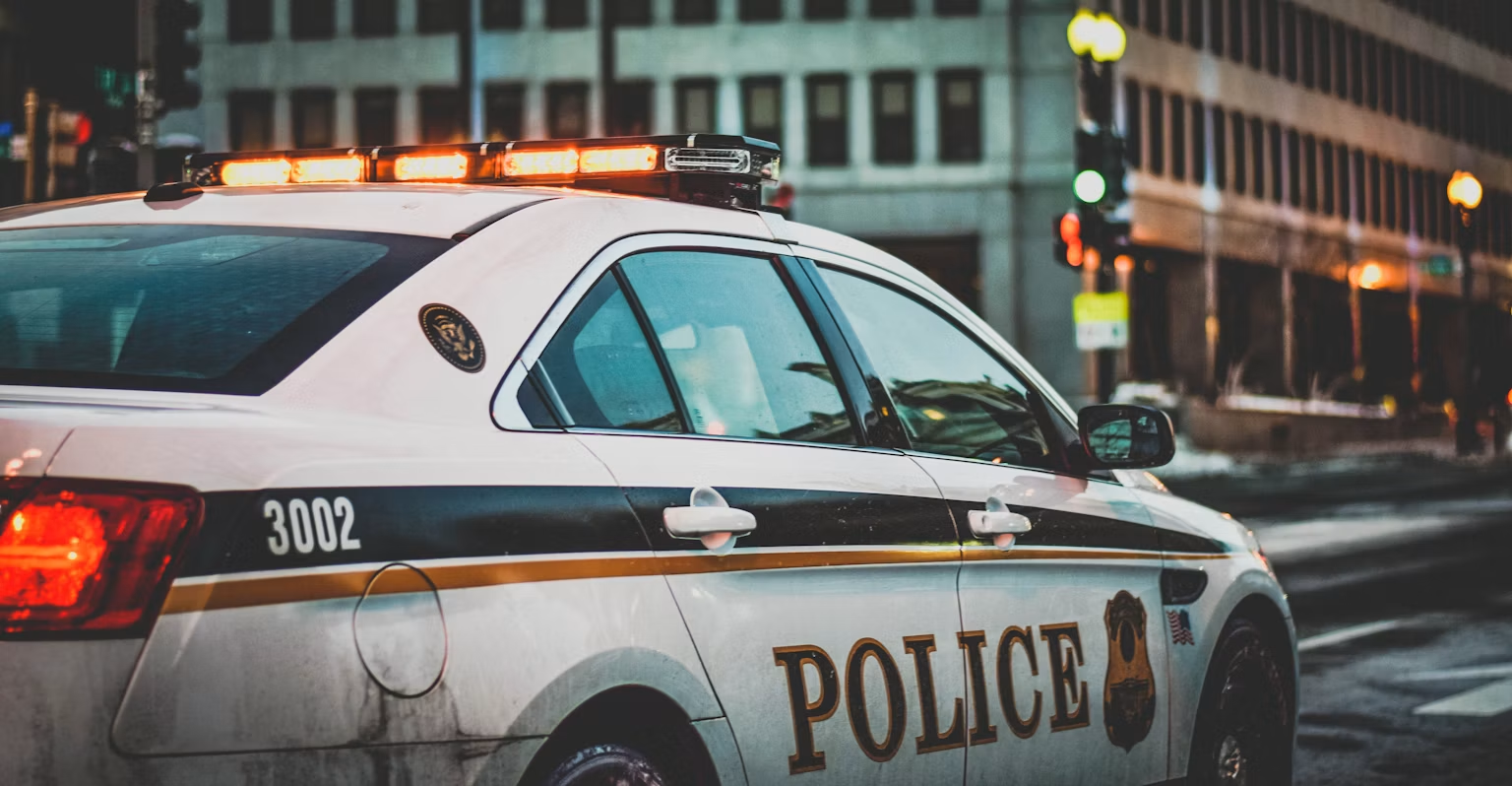
The Ghana Police CID Cybercrime Unit handles criminal investigations and prosecution.
What Evidence Do You Need to File a Report?
The police and CSA will ask for specific items. Have these ready before you go in:
- Your Ghana Card or valid national ID for identification.
- Written statement explaining what happened in chronological order, in plain English.
- Screenshots of every message, fake page, or suspicious account involved.
- Transaction records including MoMo reference numbers, bank SMS alerts, and receipts.
- Phone numbers and usernames used by the scammer (even if fake, they help trace the account).
- Email headers for phishing emails. Most email clients let you download these under “Show Original.”
- Access logs from your website if it was hacked. Your hosting cPanel has these under Raw Access Logs.
If your website was compromised, you may also want to read our guide on how to get your website off Google blacklist, which explains the cleanup process once the police investigation wraps up.
What Happens After You File the Report
Many Ghanaians give up after filing because nothing seems to happen. Here is what the actual process looks like:
- Within 24 hours. The case is logged, assigned a number, and routed to a cybercrime officer.
- Within 7 days. An officer contacts you to take a formal statement and request any extra evidence.
- Within 30 days. For mobile money and bank fraud, the receiving accounts are traced and may be frozen.
- Within 60 to 90 days. Simple cases are often closed, with arrests made or suspect accounts blocked.
- Complex cases (cross-border scams, large losses) can take 6 to 12 months and may involve the Economic and Organised Crime Office (EOCO).
For ongoing protection while the case is open, talk to us about website security and monitoring services from WebGold Digital (Nsawam, Ghana), or browse our portfolio of secured Ghanaian business sites.
Common Mistakes to Avoid
When learning how to report a cybercrime in Ghana, avoid these mistakes that slow down or kill your case:
- Waiting too long to report. Evidence disappears. MoMo accounts get drained within hours.
- Deleting the scam messages before screenshotting them. Always capture evidence first.
- Only reporting to your bank and not the police. The bank can freeze the account, but only the police can investigate and prosecute.
- Paying the ransom in ransomware cases. There is no guarantee the criminal will unlock your files, and paying marks you as a willing target.
- Posting about it on social media before reporting. This can tip off the scammer and destroy the investigation.
- Going to the wrong police station. Always go to a CID office, not a regular station, for cybercrime cases.
FAQ. Reporting Cybercrime in Ghana
1. Is it free to report a cybercrime in Ghana?
Yes. Filing a report with the Ghana Police Service or the Cyber Security Authority is completely free. Beware of any “agent” who asks for money to “speed up” your case. That is itself a scam.
2. Can I report a cybercrime online without going to a police station?
Yes. The Cyber Security Authority has an online reporting portal at csa.gov.gh, plus a 24/7 hotline. For criminal matters that need investigation, you will still need to file at a CID office eventually, but the online report is a great first step.
3. What if the scammer used a foreign number or is based outside Ghana?
Still report it. The CID Cybercrime Unit works with INTERPOL and foreign law enforcement. Many cross-border scam networks operating in Ghana have been busted through joint operations. Your report is the starting point.
4. Will I get my money back after I report mobile money fraud?
Not always, but your chances improve dramatically if you report within 24 hours. The faster the bank or MoMo provider knows, the more likely they can freeze the receiving account before the money is withdrawn. Always keep your transaction ID and call the fraud line immediately.